At a Glance: Key Findings
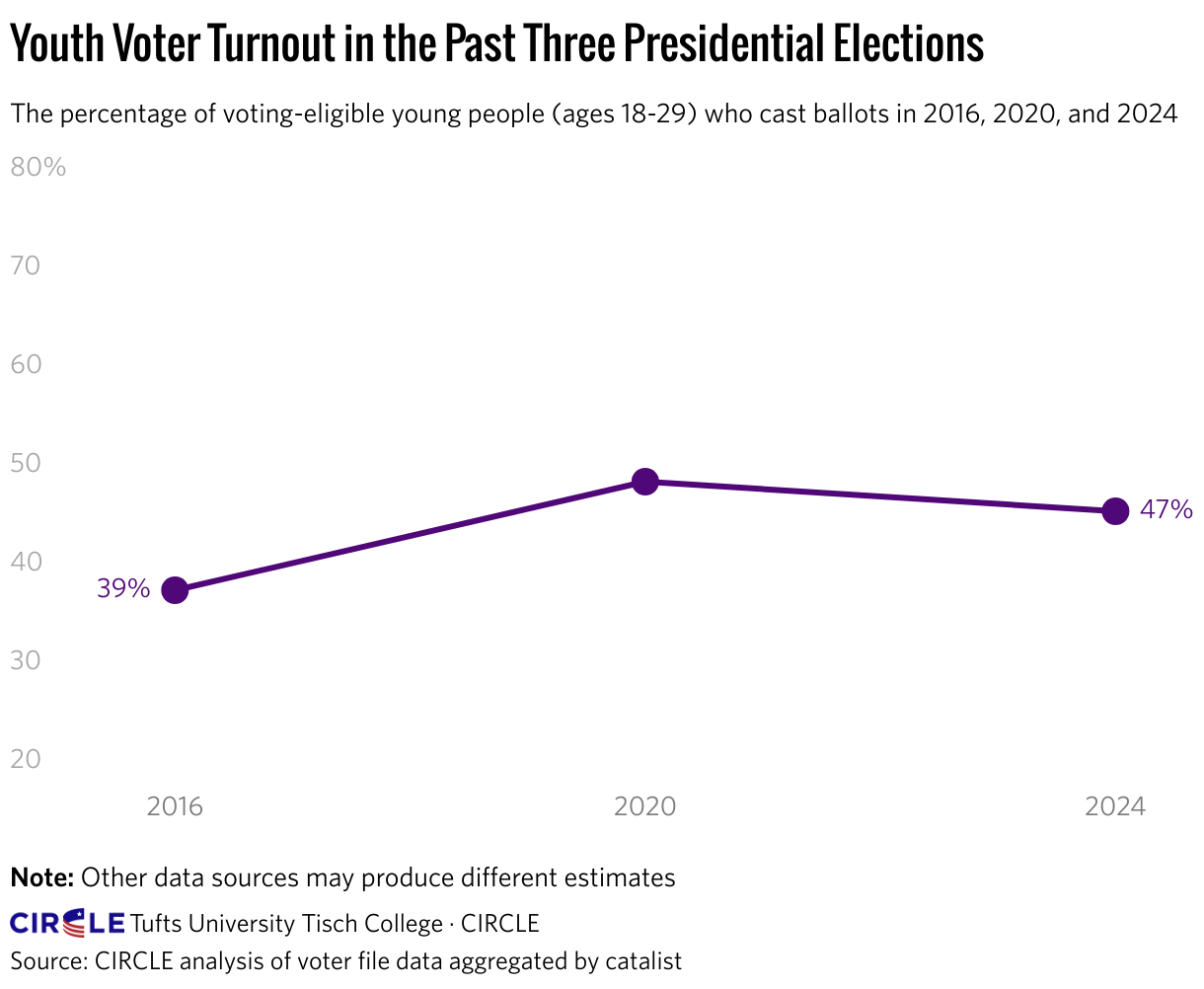
47% Youth Voter Turnout
Race + Gender Gaps
High and Low Turnout States
All measures of voter participation are estimates based on the best available data at the time. Our analysis of publicly available voter files aggregated by Catalist includes data from 40 states which have enough age data in their voter files to allow for reliable estimates. States with less reliable data by age are not included in our estimates or analyses.
While a slight drop from 2020, the 47% youth voter turnout in 2024 is a marked improvement from the 2016 presidential election, when we estimated that just 39% of young people cast ballots.
Differences by Gender and Race Driving Inequality
There was a 9-point participation gap by gender in 2024: 50% turnout among young women and 41% among young men. That gap actually decreased compared to 2020, which had higher turnout overall and for both groups (55% young women, 44% young men), but remains a major source of inequality in voting.
Differences in 2024 youth turnout by race are even larger. White youth had the highest youth voter turnout (55%), followed by Asian (43%), Black (34%), and Latino (32%) youth.
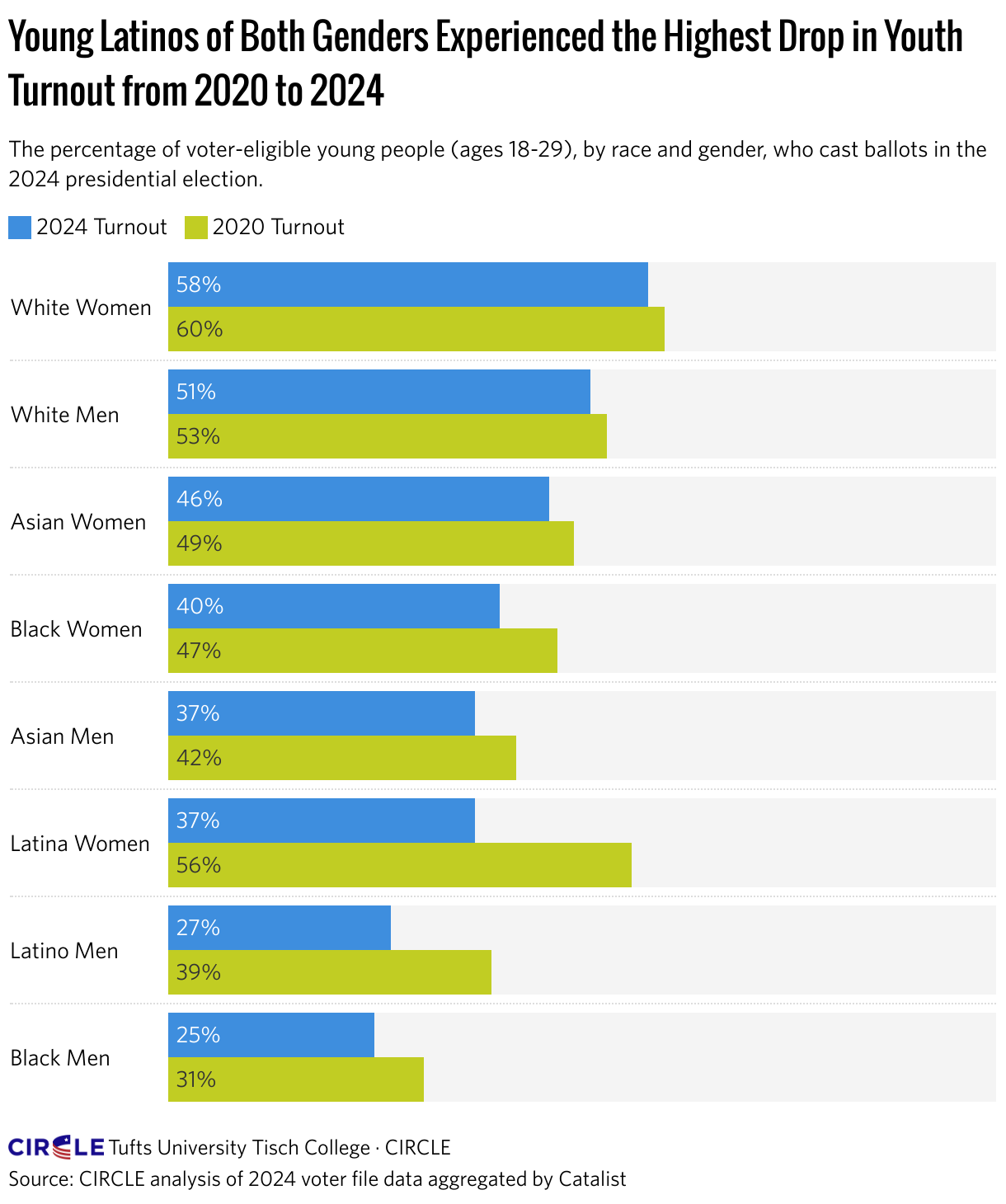
Examining participation rates by race and gender together highlights the depth of these inequities. Youth voter turnout ranged from 58% among young white women to less than half of that among young Latino men (27%) and young Black men (25%).
Economic issues and financial struggles, which were central to the 2024 election, may also help explain these wide disparities. According to our post-election youth poll, Black and Latino youth were much more likely than white or Asian youth to say that they sometimes or often find it difficult to meet their financial needs. Struggling financially was linked to lower self-reported youth voting rates in 2024. In addition, youth who didn’t vote were more likely to name jobs and unemployment was one of their top-3 issue priorities compared to youth who voted (40% vs. 22%). Black youth were most likely to prioritize that issue.
State by State Turnout Ranged from 62% to 33%
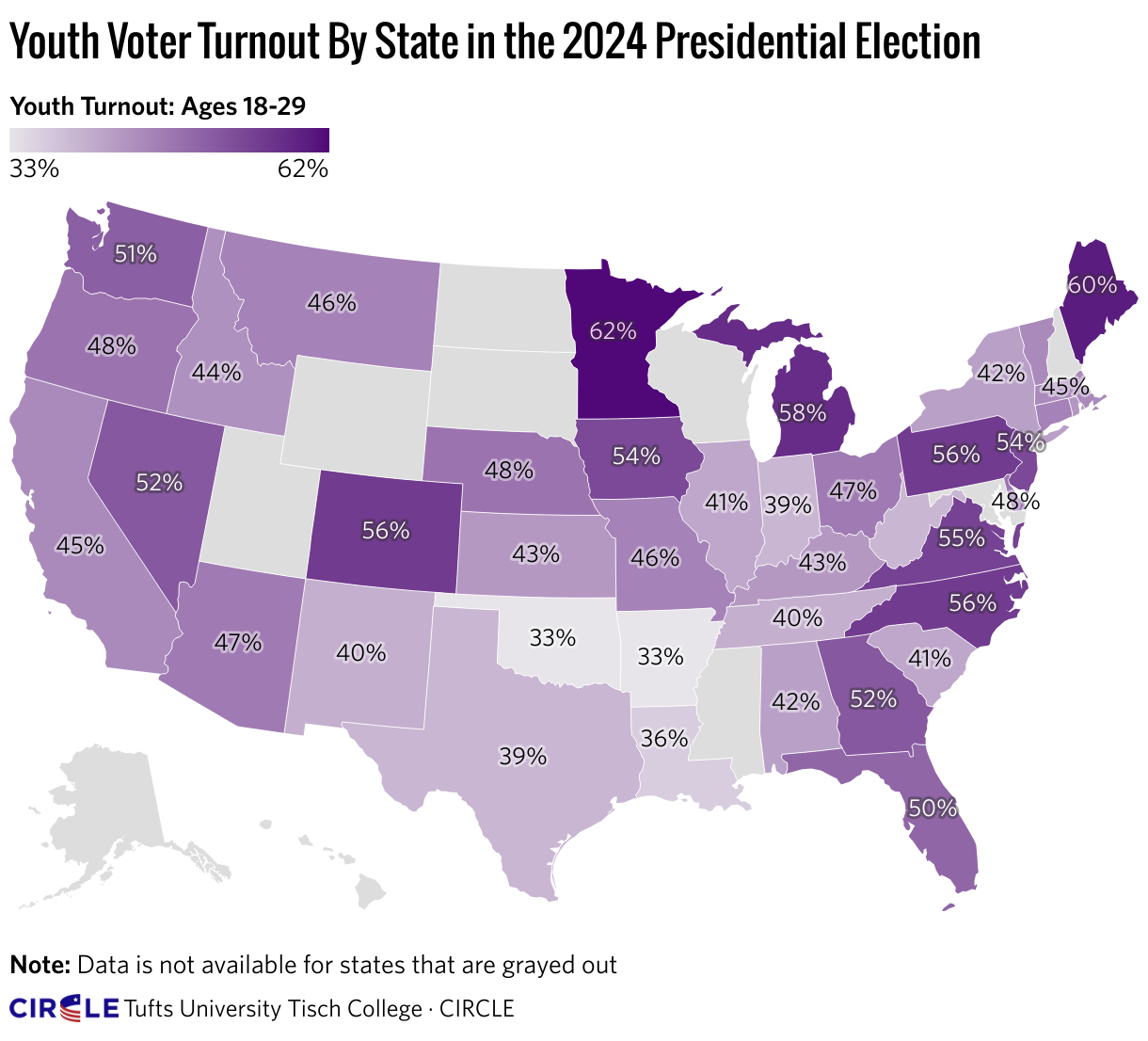
Oklahoma (33%), Arkansas (33%), and Louisiana (36%) had the lowest youth voter turnout in 2024. All three states were near the bottom in youth voter turnout in 2020 as well. As with the states that have consistently high youth participation, this underscores the challenges in those states goes beyond the particular context, issues, or candidates in a given election cycle.
Most states experienced minor decreases in turnout between 2020 and 2024, with some notable exceptions. Oregon (-11 points), New Jersey (-13), and Montana (-10) all had double-digit percentage-point decreases in youth voter turnout; all three states had exceptionally high youth participation in 2020, and their turnout in 2024 was far closer to the national average.
On the other hand, a handful of states actually increased their turnout in 2024 compared to 2020: Michigan (+4), Pennsylvania (+2), and Georgia, North Carolina, and New Mexico (all +1). Notably, the majority of these states were highly competitive battlegrounds; we have previously documented how the increased attention, outreach, and resources in these states can increase youth voter turnout. In the case of Michigan, the state also began allowing 16-year-olds to preregister to vote for the first time.
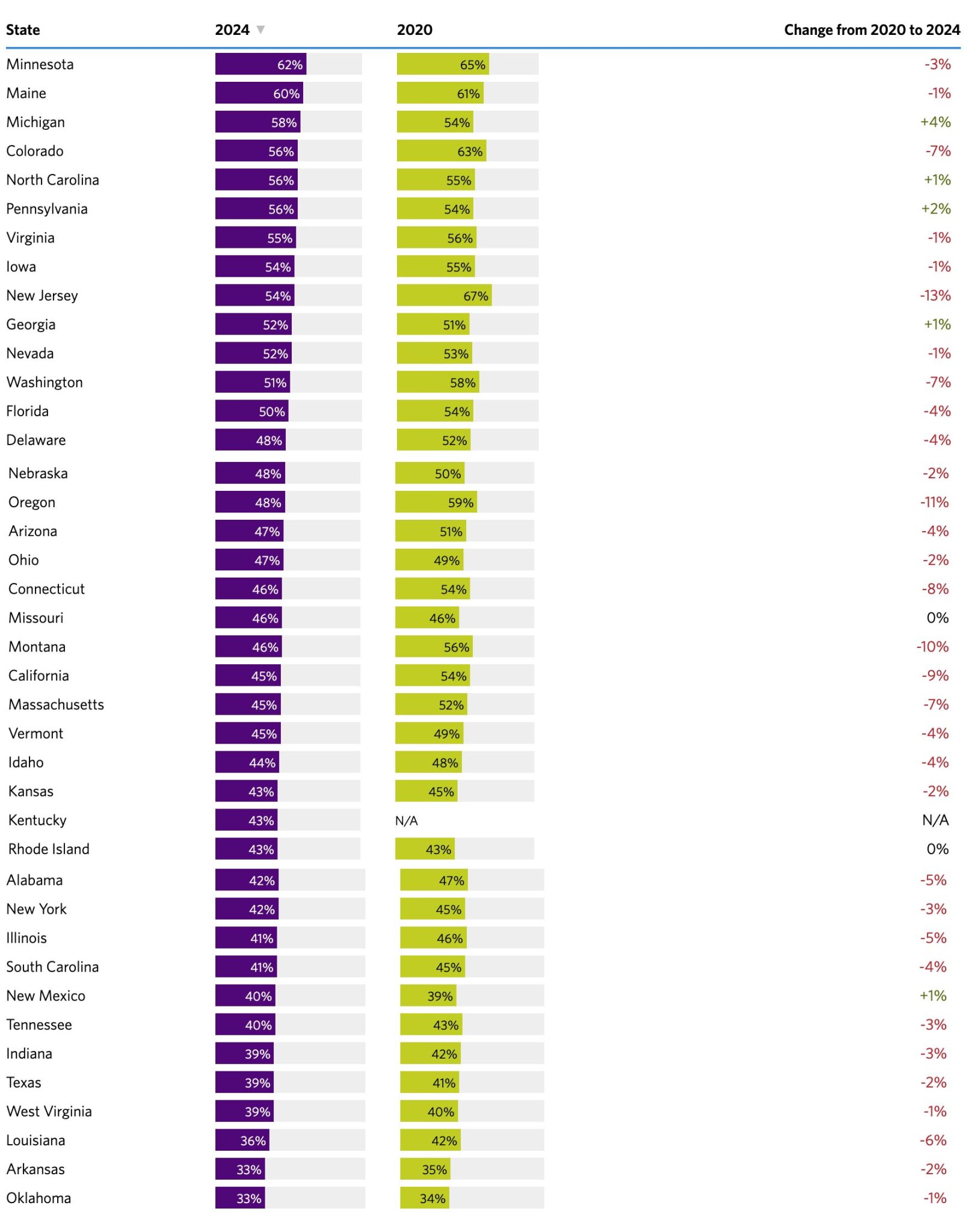
Youth Voter Turnout by State in 2024 vs. 2020
CIRCLE Tufts University Tisch College · CIRCLE
Source: CIRCLE analysis of voter file data aggregated by Catalist
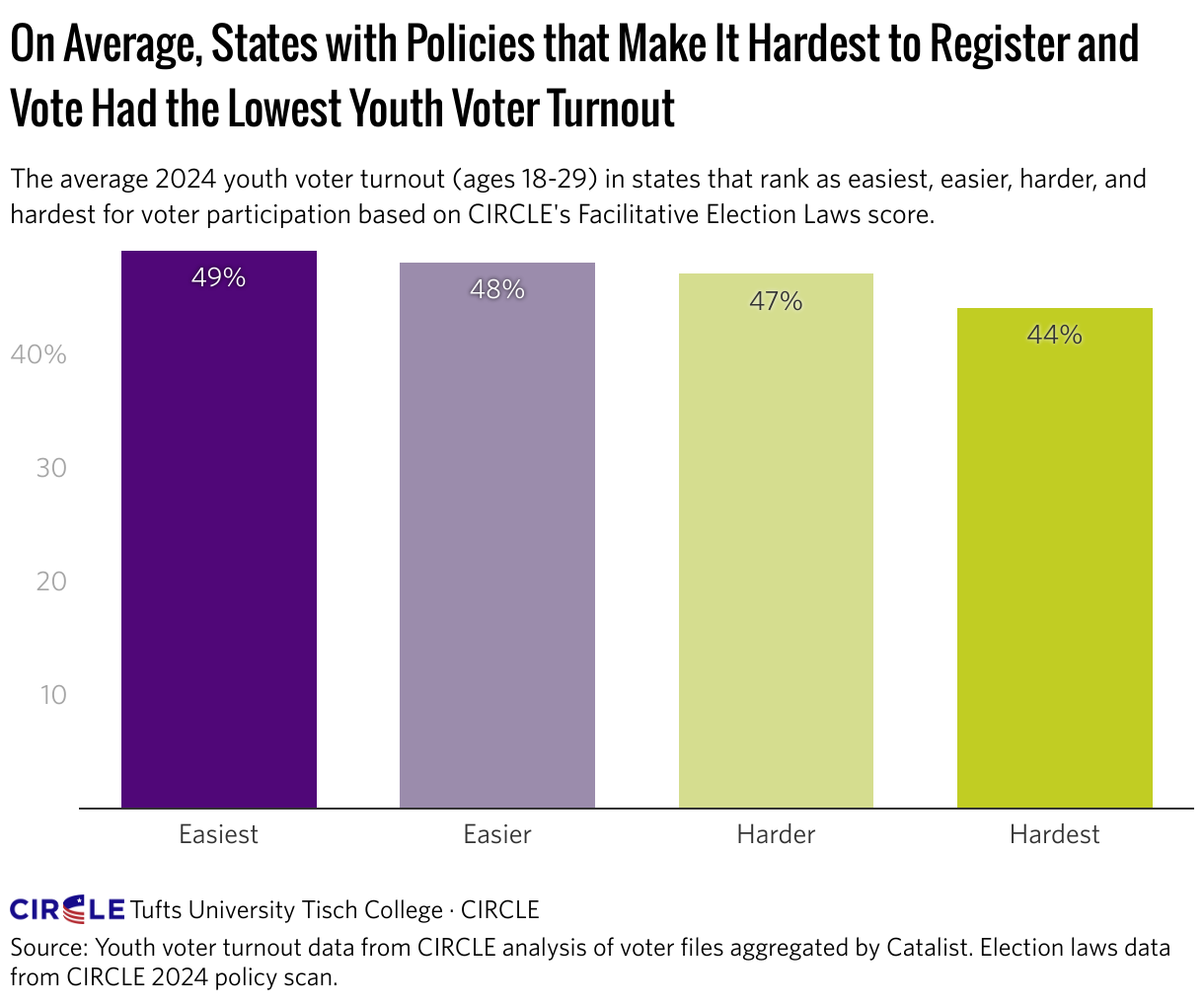
On the other hand, states like Minnesota, Maine, Michigan, and Colorado are among the top states for both 2024 youth turnout and in our Facilitative Election Laws index. All four states have AVR, OVR, SDR, and pre-registration at age 16. All four have no-excuse absentee voting, and Colorado automatically sends mail-in ballots to every registered voter. Minnesota, which had the top youth turnout in 2024, newly implemented AVR and pre-registration after the 2022 midterm election and appears to have seen immediate results. The state also had the highest voter turnout among youth ages 18-19 (60%) who are most likely to benefit from these policies to help first-time registrants.