
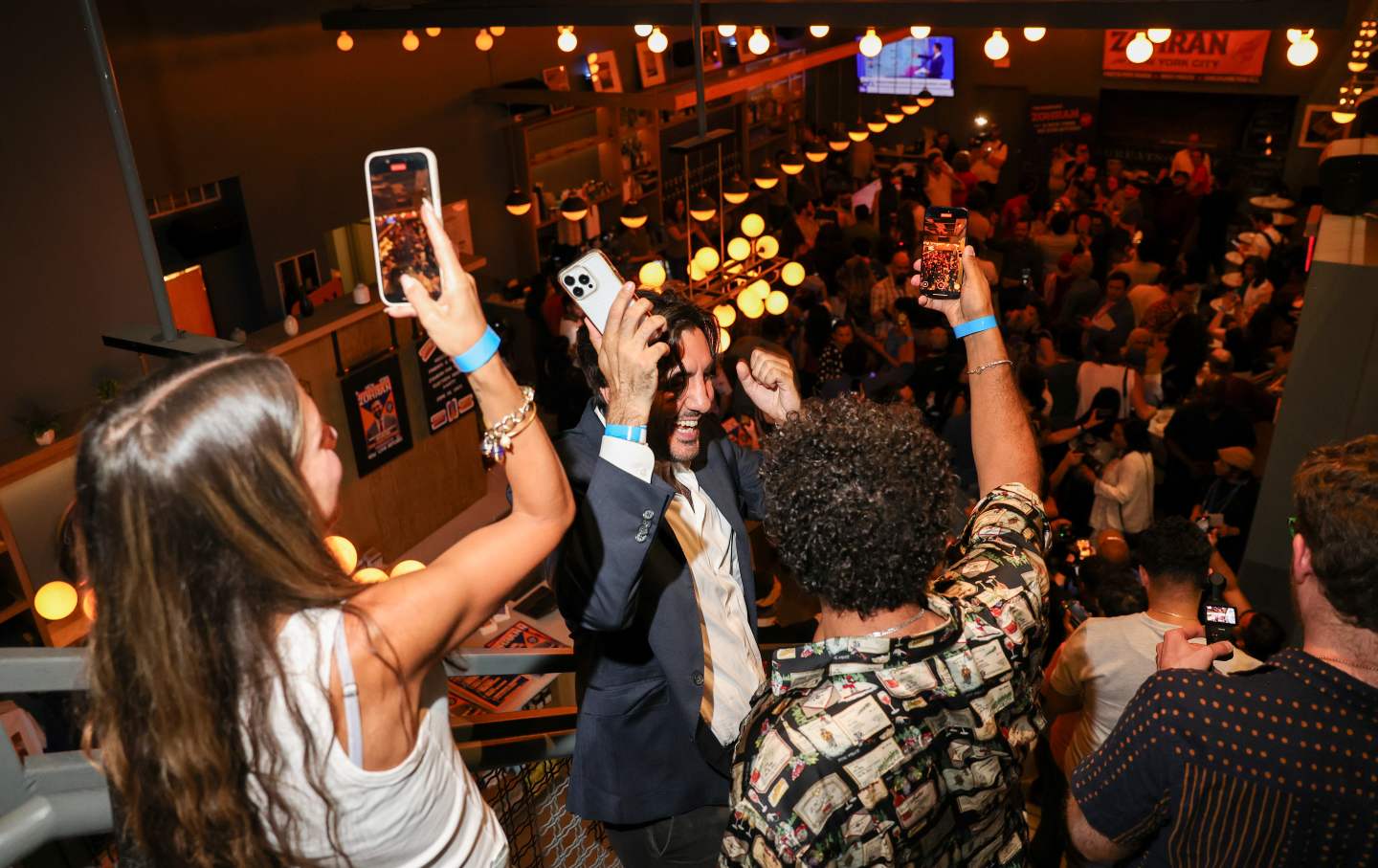
In the past year, two marquee elections have upended that wisdom: the 2024 presidential election, when young voters shifted decisively to the right from previous years, and Zohran Mamdani’s historic mayoral primary win in New York City, where he not only won young voters decisively but convinced enough of them to turn out in higher numbers than any other age group. Mamdani is polling ahead of any other candidate in the general election by double digits, and will likely win in November. A few other mayoral races seem to be following suit. From a bird’s-eye view, the movement seems strong enough to raise the question: Could this be the beginning of a new, ascendant youth bloc? Or at the very least, are there lessons we can learn from the way young people turned out in these elections?
The Trump and Mamdani examples did not come out of nowhere. Over the past two decades, young voters have increased their vote share overall. In 2008, a banner year for turnout and an election typically thought of as being decided by the youth vote, an estimated 51 percent of eligible 18-to-29-year-olds voted, making up 18 percent of all voters that year. In 2020, a similar surge emerged: 50 percent of all eligible 18-to-29-year olds voted, rejecting Trump’s disastrous response to the Covid-19 pandemic at the ballot box and proving decisive in Biden’s win. While 2024 saw a slightly lower youth voter turnout—of only 47 percent—it was still much higher than in 2016. Youth turnout was higher in states with liberal voting laws, such as Minnesota, Maine, and Michigan, and lower in states that have more restrictions on voting, like Oklahoma, Arkansas, and Louisiana.
But what happened with Zohran Mamdani was more singular: The 33-year-old not only won a large percentage of young voters on a strong message of affordability, a massive enthusiastic volunteer operation, and compelling social media content; he also inspired unusually high turnout among young people for an off-year municipal election. His win can be seen as a potential model for youth engagement for the rest of the country for a few reasons. New York City has a progressive reputation, but political allegiances vary wildly between neighborhoods. In cobbling together a coalition to win, Mamdani reached across various demographics that typically do not vote alike; he won Asian and Latino voters handily, outperformed expectations with Black voters, and won young voters of all races. In contrast, Andrew Cuomo’s campaign, primarily defined by the city’s most prominent institutions—most labor unions, real estate, state party leadership, and elected officials, including some who had previously called for Cuomo to step down in 2021 after sexual harassment allegations—proved to have little relevance to the lives of young voters.